
Antiquarenbeurs Mechelen
Exhibitor
Florisatus Fine BooksPlein 19 C
2511 CS Den Haag
Netherlands
Contact
Edwin & Liesbeth BloemsaatPhone
+31 (0) 614 270 027 +31 (0) 614 270 027Website
ilab.org/affiliate/florisatus-fine-books-manuscripts-musicalia
The 3rd edition of this famous obstetrical manual
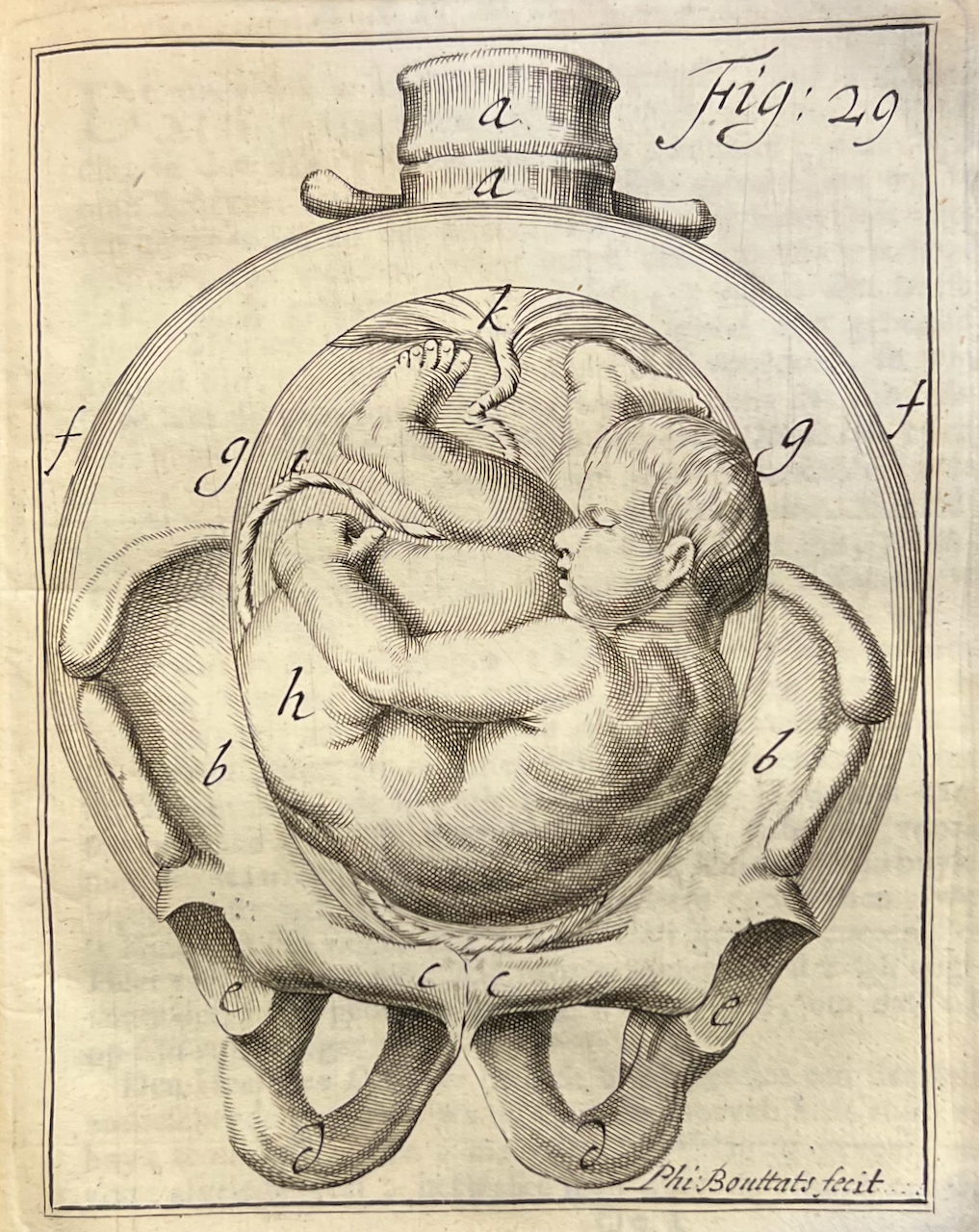
Manuale operatien, zynde een nieuw ligt voor vroed-meesters en vroed-vrouwen, haar getrouwelyk ontdekkende al wat nodig is te doen om barende vrouwen te helpen verlossen; [...] Met het Nader vertoog van de swaare baringen, en nieuwe aanmerkingen door den Autheur nagelaten.
Leyden, Jan en Hermanus Vanbeek, 1746. 3rd edition. 4to (210 x 155 mm). [XXXII], 555, [13] p
With an author's portrait engraved by P. Bouttats after F. v.d. Wilt and 40 figures on 36 (7 folding) engraved plates.
Vellum laced case binding. Title in ink on spine. The 3rd edition of this famous manual, enlarged with the remarks of the French doctor Jacques Jean Bruier d' Ablaingcourt. The first edition appeared in 1701, the second in 1734. There should follow editions in 1765 and 1790.
Hendrik van Deventer (1651-1724) "has been rightly called "the father of modern midwifery", for this book with its interesting plates, gives the first accurate description of the pelvis and its deformities, and the effect of the latter in complicating labor. At the same time it is a pioneer work in the delineation of deformation of the spine. There was nothing quite like it until 'Das enge Becken' of Michaëlis was published 150 years later.' (Garrisson & Morton). Van Deventer was on of the first to discredit the idea that pubic separation was a normal occurrence on labor, but subscribed to the erroneous belief that the coccyx and sacrum swings backwards during labor to make room for the child's head. Figures 13 and 14 depict Hendrik van Deventer's birth stool with adjustable seat, hand grips and a warming pot.
-Provenance: With the ex libris of H.H. Jonkers
-Literature: DMB, 434f; STC Blake, 118; BMN, I, 336; Lamers 206/7;Comp. G&M 6253 (1701 ed.).
-Condition: Occasional foxing in the white margins; A very fine copy.
With an author's portrait engraved by P. Bouttats after F. v.d. Wilt and 40 figures on 36 (7 folding) engraved plates.
Vellum laced case binding. Title in ink on spine. The 3rd edition of this famous manual, enlarged with the remarks of the French doctor Jacques Jean Bruier d' Ablaingcourt. The first edition appeared in 1701, the second in 1734. There should follow editions in 1765 and 1790.
Hendrik van Deventer (1651-1724) "has been rightly called "the father of modern midwifery", for this book with its interesting plates, gives the first accurate description of the pelvis and its deformities, and the effect of the latter in complicating labor. At the same time it is a pioneer work in the delineation of deformation of the spine. There was nothing quite like it until 'Das enge Becken' of Michaëlis was published 150 years later.' (Garrisson & Morton). Van Deventer was on of the first to discredit the idea that pubic separation was a normal occurrence on labor, but subscribed to the erroneous belief that the coccyx and sacrum swings backwards during labor to make room for the child's head. Figures 13 and 14 depict Hendrik van Deventer's birth stool with adjustable seat, hand grips and a warming pot.
-Provenance: With the ex libris of H.H. Jonkers
-Literature: DMB, 434f; STC Blake, 118; BMN, I, 336; Lamers 206/7;Comp. G&M 6253 (1701 ed.).
-Condition: Occasional foxing in the white margins; A very fine copy.
€ 1.200
View exhibitor's highlights